24.11.08

A Few Last Thoughts on the Eat Local Challenge

All of the food you see here is locally grown or produced,
except for that pesky block of Spanish manchego
near the top.
Well, we can't all be perfect, can we?


I hate to admit it, but I dropped the ball the last week of the Eat Local Challenge. My excuse is that it coincided with moving to a new place, but really, there's no tip-toeing around the fact that I totally blew it off at the end of the month. Worse, not only did I bomb the end of the challenge, but I ate frozen fish sticks, microwavable meals and anything else I could find that was in the freezer or cupboard that entire week, just so that I didn't have to think about dinner or move it to the new place (shh...one of those microwavable meals was set to expire one week after I ate it...Lord help me!). So, since I guiltily cheated and bombarded my digestive system with all manner of preservative-laden and nearly expired processed foods, I thought I should at least weigh in on some of the things I learned during the month. Consider it a retribution of sorts for my lack of gastronomic discretion, or... the least I could do.

Since I had opted for the "produced in Hawaii" as part of my "exceptions" list, I had been planning to have a single week (preferably the last week) where I would eat only foods grown in Hawaii, but alas, in the midst of it all, that didn't happen either. I did have several meals that were made from only locally grown foods (and you'll be seeing the recipes and the stories to go with them in the coming days), but they didn’t happen consecutively. Since I'm a card-carrying member of the Alice Waters devotee club and could be happy eating a tomato fresh from the garden with only a sprinkling of finishing salt (black lava salt of course) or sauteed greens with only a little macadamia oil and a splash of shoyu (I never found garlic here either), many of the meals were simple.

Ba-Le Bakery bread (Oahu) with Surfing Goat Dairy goat cheese (Maui),
a fresh North Shore Farms heirloom tomato (Oahu) and a Blue Lotus organic egg (Oahu) -
topped off with black lava salt from the Big Island.

Most of the truly local meals consisted only of meat or fish with vegetables or vegetables only (remember, there are no grains grown here and no dairy widely available). No matter what we were eating though - locally grown or locally produced - I wanted the flavors of whatever ingredients I was using to shine through, barely unadulterated. I figured that if we were getting the freshest ingredients, grown closer to our front door than anything else we could possibly buy, then I wanted to be able to taste the difference. And you could. Since nearly everything that travels here must come from at least 2000 miles away, crispness in a head of lettuce or chicken that has no smell of ammonia is a treasure in itself. Don't get me wrong, we have our diamonds though too that are hard to find elsewhere - the sweetest mangoes and pineapples, rich Kona coffee and chocolate, and amazing grass-fed beef (even better than any I had in Oregon).

The Challenge was certainly an eye-opening experience. I began to think about things I hadn’t before, like labeling laws and which large grocery store chains had foods that I wanted to support, because they supported the farmers and producers I wanted to buy from and had the most local foods available (or had clerks that knew something about the food they were selling!). I found wonderful new farmers and producers that make and sell fabulous foods, right here in Oahu, and I even got to know some of them. I was blessed by the kind offerings of things like home-grown okra and freshly picked macadamia nuts from friends who wanted to help out. One family even cooked us a meal in their home full of locally grown vegetables, so that we could stick to our convictions when we dined with them. I found beautiful new vegetables, fruits and fungi (from "French" sorrel and dragonfruit to tree tomatoes and pepeau), ate the bounty of the land (beautiful papayas, mangoes, coconut and taro) and experienced eating a truly free-range chicken. I learned an incredible amount about the food itself and the people who grow it here, and I am still learning...honestly, this journey has really only just begun.

North Shore Farms Big Wave and Heirloom Tomatoes

I'll certainly continue to eat mostly local foods - all of my eggs, vegetables, fruits and the majority of the meat and fish we consume have always been local. I feel it's important to keep my money my local economy, especially in such trying and expensive times, so I'll continue to support the farmer's markets and the farmers and producers that grow and make beautiful products, and especially those that follow practices that I support - like organic farming. I'll also continue to boycott products whose practices I don't support - like shipping pigs in from far away...my pork will be from the mainland, and an organic farm, until I can find a more acceptable source closer to home.

It's definitely possible to eat only locally grown foods (read here, for someone that did it the entire month - and a great blog and website to boot!) and even more so to eat only locally grown and produced foods. It's not easy, but it's definitely a worthwhile experience (and way of eating). In general, locally grown vegetables were cheaper at the farmer's markets than at the grocery stores. But searching the grocery stores for local products wasn't as easy on the wallet (or the gas tank) as I had hoped. And it will continue to be that way, until we demand from the stores that the local products are the ones we want to buy. Until something changes, we can choose how and where we spend our money. The people here in Hawaii (and elsewhere) need a better awareness of our foodshed in general, and while there are some great places and organizations making big strides in this arena, there is always room for more...I hope to be a part of that movement in the future.

Local papaya, pineapple, dragonfruit, tangerines and a tiny citrus fruit from a
tree on the Island where I work - very sour, but perfect for drinks!


And LB? He made it through the month with shining colors - even suggesting we continue to have a week here and there where we only eat locally grown foods...I'm so proud. Now if I could just get him to take the reigns and do the actual shopping for it. Maybe next year?

For other posts related to the Eat Local Challenge, as well as many resources for local foods, go here: 1, 2, 3, 4. Also read the Eat Local Challenge website and the Share Your Table blog - both are full of great information!

21.9.08

Foodbuzz 24, 24, 24: `Aha`aina - Recapturing the Global Flavors of the Luau

"24 Meals, 24 Hours, 24 Blogs" is a global blogging event, devised, collected and showcased by the amazing folks at Foodbuzz.com. This event celebrates the scope and diversity of food blogs by capturing the cultural diversity and unique local perspective of bloggers from around the world: it's real food, experienced by real people, and shared real-time.

In Hawaii, community celebration comes in the form of feasting on delicious food in the company of family and friends. Today this feast is often called a luau, but sadly, the only luau that visitors to Hawaii (even long-term visitors) are able to participate in has gone the way of many other fine traditions – turned to entertainment for tourists and comprised of a pared-down menu of accepted (and expected) dishes...and I believe, losing the very reason for its being in the process.

Green Salad with Papaya Seed Dressing (Hawaii)

The luau didn’t begin this way. It originated with King Kamehameha II, who brought peace and equality to the ancient Hawaiians in the early 1800s by finally bringing the social classes together and banishing the arcane rules that had long dictated their lives. This historic change was christened and celebrated by a great feast, called an `aha`aina. Suddenly, commoners were permitted to eat with royalty and women were allowed to eat beside men - everyone rejoicing around a single table.

Korean Pancake (Korea)

For the first time, Hawaiian delicacies such as bananas and coconuts that were previously reserved for royalty were enjoyed and shared between all and traditional Hawaiian staples such as poi (taro), crab, pig and yams, were eaten alongside exotics from the New World. Since the inception of the`aha`aina, culinary influences such as miso, rice and teriyaki from the Japanese; sweet bread, sausage and malasadas from the Portuguese; and dishes like lomi lomi salmon from the West have been incorporated into Hawaiian cuisine.

Huli-Huli Yakitori (Japan)

Modern Hawaii is a global melting pot more than ever. Across the Islands, people celebrate life and pay tribute to their heritage by bringing and sharing dishes that reflect their own cultural customs and backgrounds. In keeping with the spirit of celebration for life and fellowship that began so long ago, we wanted to revive the `aha`aina for the for the Foodbuzz “24 Meals, 24 Hours, 24 Blogs” event. To create this `aha`aina and to promote the sharing of cultural ideals and food traditions, we brought our friends and coworkers – all home cooks - together to celebrate global diversity in true Hawaiian style…to simultaneously recreate and reinvent the `aha`aina on a tiny island off the coast of Oahu.

Tortilla Espanola de Patata (Spain)

For the event, rather than devise a specific menu, we challenged them to do one of two things:
1) Create a new version of a traditional Hawaiian dish, using ingredients that are prominent staples of their country or ethnic background; or
2) Make a traditional dish from their country or ethnic background using locally available Hawaiian ingredients.

Lau Lau with a Fijian Twist (Fiji)
The response was overwhelming – we had nearly 30 people, most of whom didn’t know each other prior to the `aha`aina. Our one requirement, beyond the creating of the dish, was that each person be willing to share a bit of themselves, their culture, and their cooking with the rest of us. The group embodied the global community that has been drawn to Hawaii because of its unique location and spirit of aloha, and included people from over 16 different nationalities - from Hawaiian to Guamanian, Japanese, Mexican, Lithuanian, and beyond.

To bring home the concept of community, not only between those of us living here in Hawaii, but across the world wide web as well, we even invited other Foodbuzz Featured Publishers in Hawaii to join us - to bring their own cultural identity and cooking prowess to the table, and to cover it on their own blog and in their own style. Only one, Deb, was able to attend and you can read her thoughts about the whole experience on her fabulous blog, Kahakai Kitchen.

Kalua Pork Cabbage Rolls "Kaldomar" (Sweden)

For the `aha`aina, cooks and non-cooks alike came out swinging – the food was a veritable feast, both for the stomach and for the eyes. Since each recipe was newly created by the person that brought it to the table, many people were hesitant when they arrived – worried that their food wouldn’t taste right, wouldn’t be right; that it might not look or taste “good enough,” but as the tables were set up and filled with beautiful food, there were satisfied faces and smiles all around. There was no “best dish” of the day – instead of competition between dishes and people, there was only sharing, tasting and discovering the tastes of everyone’s unique heritage, combined with the flavor of land we live in and love (Hawaii, of course!).

Roasted Vegetables and Pineapple Provencal (Italy)

The quality and deliciousness of the feast was clearly evident in the audible exclamations and sounds of surprise and delight that were heard across the table amid the other conversation (and in how much and how fast all of the food disappeared). Before long, as the scent of coconut, mangoes, and pork wafted out into the air, we even had "neighbors" that began to trickle in and ask if they could join the feast. The food literally brought an unexpected and unique group of people together. There were kids running around exploring the new surroundings and providing the feeling of a large family joined together, while the adults were having a different kind of new experience – on the palate and in the spirit of fellowship and new friendships forming.

Many people reflected that they reconnected to parts of their heritage through the experience of coming up with their dish – to mothers, to grandmothers, to childhood memories and family gatherings, and even through traditional recipes they had never heard of nor tried before. Some created their dish as a way to thank the land and the people there – using ingredients from Hawaii and integrating a piece of themselves and their culture with the land they now live in, and sharing it with the people there. One even swore off the luau, exclaiming they would "rather have an `aha`aina any day! Everyone agreed they would definitely come back together for another one (next year, perhaps?).

Kadon Pika (Guam)

We believe this feast represented the true meaning of the `aha`aina and the aloha spirit of the people of Hawaii, reinvigorating the tradition of fellowship and community celebration in the hearts and minds of the people who attended. But the `aha`aina needn’t be specific to Hawaii. It could be recreated anywhere - near or far, around a smoldering imu (an underground oven for cooking Kalua pig) or in your own backyard...you can recapture the global flavors, and the spirit, of the luau in your own way.

As you know, the food blog world truly represents a global community – connecting people across the world at tables and in kitchens, regardless of any borders. But food itself is the universal language of the planet: no matter who you are, where you live or how much money you have, you have to eat – it’s a requirement of human survival and part of the whole human experience. But there is a global community, and a world of creativity, existing right outside your doorstep too – in yourself, your family and your friends. Bring them together, ask them to share a bit of themselves with you, and relish in learning something new about them. I guarantee you’ll be feasting and celebrating life together around a table of amazing food...and what could be better, or more worthwhile, than that?

Dobos Torte with Lilikoi Curd (Hungary)

Stay tuned for the incredible recipes (plus more photos) from this amazing event - they'll be posted soon!

Victorian Sponge Cake with Coconut Cream and Guava Jam (England)

30.7.08

The Intersection of Blogging and Life: Meeting a Fellow Food Blogger

If you've ever met a fellow blogger, especially one that lives nearby, then you know the scenario...

You've set the date (yesterday), set the time (7PM), and picked the restaurant (Casablanca) - a fairly new Moroccan place in town that some co-workers had recommended. You know you're taking a risk on a restaurant that neither of you have been to, and realize the extent of that risk when you read the reviews and all it talks about is how sensuous the food is and the sexy appeal of the dark, sultry dining room. This is a first *date* of sorts, after all. But, what the heck? Live life adventurously, right?

And you already know they love food as much as you do.

You've picked out your clothes - not too nice because you don't want to seem like you're trying, but just nice enough that you don't seem like a slob. You arrive a bit early, because you don't want to be late the first time you meet. You're not really sure what your dining companion looks like, because they don't have a picture on their blog, but then again, neither do you. But when you get to the mostly empty restaurant and they seat you front and center, you're sure you'll be able to tell when they walk in.

And you can.

You meet, exchange hello hugs (you've been conversing over email anyhow and feel like you sort of know them already), and take your seats at the (very) low tables. It's really quiet in the restaurant, so you find yourselves whispering at first. You're nervous and thinking, what if they don't like me? Even worse, what if they stop reading my blog after this - that would be awful!? You brought your own wine because it's common here in Hawaii to do so since many places do not have liquor licenses - and you're happy to hear they don't charge a corkage fee. As you open it, you silently hope the transit in the shipping containers didn't ruin it (but of course, like would happen on any first *date,* it did). You're slightly embarrassed at how bad the wine is, actually, but you both laugh it off and decide to enjoy extra helpings of the mint tea instead.

There are a few moments when you're not sure what to say, as in any first meeting with someone you hardly know, but you're relieved to find that the conversation flows smoothly for most of the night. Because you're slightly nervous (you really want them to like you!), you accidentally knock your bread from your plate onto the floor (oops). But the soup is delicious, and you can tell that you're both wondering how to recreate the flavors at home. You talk about how much each of you loves soup, but how hard it is to eat warm soup when it's hot out all the time. You discover that you both read some of the same blogs - and it's like discovering you have mutual friends.

Things get even more interesting when you realize that there is no silverware at this place, and that you have a leg of lamb sitting on the plate between you with only your fingers and hands to dig into it with (no wonder they called it "sensuous" food!). The lamb is tender (if messy) and the capers and tomato sauce surrounding the soft calamari rings has a unique depth of flavor to it. After a while, you even forget that you're eating with your hands - until you drop some of the tasty chicken and cinnamon pastry dish from your fingers onto some of the other plates you're sharing. You apologize bashfully for dropping the food that was destined for your mouth on the mutual plates, and you both start giggling when the waitress arrives and tosses (a somewhat hefty amount of) orange blossom water at the top of your head from a tea kettle before she brings dessert.

By that time, the conversation comes easily now. And as it veers to food and restaurants and blogging, and you see their eyes light up and that they understand how blogging gets under your skin and the community becomes a part of your life, you know that you've found a kindred spirit. Neither of you is impressed with the fairly greasy and sticky funnel cake dessert, so you have extra mint tea instead - the honeyed flavor bringing a gentle end to the meal. Finally, you leave the restaurant with more hugs, deciding to take a cooking class or two from the local community college together, and head opposite directions down the street to your cars. You hope quietly to yourself that she had as good of a time as you did.

As you walk towards your car, you turn and take one last look at the front of the restaurant - "Casablanca" is painted in bright yellow letters against an azure background. You smile, and can't help but think to yourself:


* * *

Yesterday, I had the distinct pleasure of meeting a fellow food blogger - Deb, from Kahakai Kitchen. After "stalking" her for the last month on her blog (once I found that there was another food blogger here in Hawaii whose site I thoroughly enjoyed reading every day, there was no going back), I finally convinced her to meet up with me (wink, wink). So I'm happy to report that she's even sweeter and funnier than I imagined she would be, and I love her easy-going personality, which is also apparent in all of the wonderful things she writes on her blog (not to mention the amazing-looking recipes). I'm really looking forward to taking the culinary classes and exploring some of the foodie adventures that Hawaii has to offer with her. It's great to have all sorts of friends to do different activities with, but knowing someone in the same town that is as big a food dork as you are? Priceless! Thanks for a great evening, Deb!

While the food at Casablanca was good (not stellar; except, perhaps, the soup), and the experience of eating with your fingers, washing your hands at the table and having orange-blossom water thrown at you is its own treat, we both agreed that the $34 price tag for the prix fixe meal was not necessarily worth it and that we would probably only go back in a large group.

Casablanca Restaurant
19 Ho'ola'i Street
Kailua, HI

14.7.08

Diet for a Small Bird, Part II

Quite some time ago, I wrote a post to introduce you all to Tweety, our baby "myna bird." I gave LB a sufficient amount of teasing for bringing the scraggly-looking little fella home (or he might have been a girl, maybe, but his later personality confirmed to us, at least, that he was of the male persuasion), we started feeding him moistened dog food and avoided handling him (for the first few weeks anyway...), and finally rid him of the nasty case of bird mites that he had (one word: ew).

Once he could sort of move around (he had adult-sized legs and feet even as a little guy so it took him a while to be able to get his round little body up on those stilts!), we moved him from the bowl into a box, and soon he had started hopping around his box, getting more feathers and looking more and more like a bird. He also stopped tweeting quite so loudly all the time, except maybe at 5 in the morning, which all-and-all was a welcome change. Then one day, we had (thankfully) stuck him inside for the first time on a window seat in our room while we were gone and came home to find that little Tweety had escaped his box and was sitting on the window sill, just checking things out.

After that, we bought him a cage to keep him safe at night and while we were gone (there are cats in our neighborhood, as well as lots of dogs and cars just over the fence), but left the door open while we were home. With all that "freedom," Tweety started to fly. He wasn't very good at first, and often looked for wider landing spots (including my head/hair), but he was doing it all by himself. He also stopped tweeting and started making really beautiful (and some not so beautiful) calls when he was outside by himself. As he got a little older, he developed a bit of a curious crest of feathers on the top of his head...

Turns out, Tweety wasn't a myna (or mynah) bird at all, he was a red-vented bulbul. While still considered a nuisance species and one that is invasive here in Hawaii, he quickly became part of the family and we, despite our best efforts, fell quickly in love with him. As adults, red-vented bulbuls, or Pycnonotus cantor if you prefer scientific names, have a brilliant red underbelly - or maybe undertail is a better description (see these pictures). Another interesting side note is that they are one of a few species of animals, along with bats and humans, that cannot synthesize their own vitamin C and must get it from their food - thus, perhaps, why they are huge fans of fruit, one of the characteristics that makes them into "pests."

Tweety's personality was vibrant - he would chastise the dogs when they came outside for being in his space, he would call out to us when we went inside, shake his wings with excitement when we came outside and loved to sit on our shoulders in the evenings, nestling up to us as it got cooler towards night and cooing in our ears. Man, he was just plain cute. He loved to be held and petted, especially under his beak and would fall asleep sitting nuzzled against your neck or cradled in your lap as you pet his head (I never thought bird's liked being petted!). He even would occasionally mimic our whistles, although he definitely had his own repertoire of innate bird calls. We stopped caging him at night as soon as he could fly - we didn't want him beating up his feathers trying to get out as soon as he saw us in the mornings - and we never re-caged him after that. He stuck around for most of the day for a while, then was only there in the mornings and the evenings for meals and to enjoy a little nuzzling before bed.

You might notice that I'm using the past tense here. That's because our little Tweety "flew the coop" and left us two weeks ago. He started coming around less and less, leaving the yard to explore the neighborhood, and then one day, after a few minutes of being pet, he cooed and then just flew away...for good. I couldn't even see where he went. For the first week, very time we saw or heard a red-vented bulbul in the yard (we can recognize and distinguish their calls from mynahs, cardinals, java sparrows, finches and other birds in our yard now), we ran outside and started whistling, hoping it was him, looking to see if it was a juvenile bird (no red butt! Tweety had just one or two little red feathers on his underbelly, having not yet gained his stark red coloring) or if the bulbul would come when we whistled. But now it's been two weeks, and I don't think he'll be coming "home" again. This is okay. This is what birds are supposed to do - to prevent inbreeding, most fledglings are evolutionarily primed to leave the nest and the area where they were born.

But I'd be lying if I said I didn't miss him, because I do. I'd be lying if I said I didn't want him to come "home" again, because I do. But I'm happy. I think he's actually going to make it out there in the wild somehow...so long as a cat or a car didn't get him, which I try not to think about. His calls were innate, his ability to fly was innate and the last few weeks he was obviously finding food on his own because...well, let's just say we could tell he wasn't eating stuff other than what we were feeding him. He was strong and healthy when he left - I think you can see that just by looking at the last pictures we have of him (above) - so all we can do is hope that he's well and that he's making his own way...that he's become a wild bird.

Sometimes we have to learn to let go of the things that we love, like the quote by I don't even know who, that we've all heard before:

If you love something, set it free.
If it comes back to you, it was always yours.
If it does not, then it was never yours.
For we do not possess anything in this world...
we only imagine that we do.


And it holds true for birds, people and more. But while it may be true, that doesn't mean it doesn't hurt a little when they go. For me, food is always comforting, no matter where it hurts - on the outside or on the inside. In the winter, when it's cold out, I always want hearty, warm stews and crusty bread to dip in them. But when it's hot, like it is here most of the time, it's too hot to eat something like that, even if you do need some comforting (though a little bird's beating heart and cooing next to your neck is pretty darn comforting too -
boo hoo). This is one comfort-food dish that comforts, no matter what the weather is like: Tri-colored Orzo with Chicken, Veggies and Chickpeas (for Tweety). Think of it as a much healthier version of the comfort that comes from a pint of Ben and Jerry's Ice Cream.

The recipe is based on a recent recipe from Bon Appetit magazine, but my version is listed below. The night before I made it, I had grilled some vegetables for a ratatouille, including eggplant, green beans, onions and tomatoes. After grilling the veggies, I put them in a bowl and let the olive oil and juices ran down into the bottom of the bowl. When I took what I wanted out of the bowl that night, I left the rest of the veggies in there, soaking in their juices. I also threw a couple of extra chicken breasts on while I was grilling - seasoned only with salt, pepper and dried oregano. All of that - the veggies, oil, and chicken went into this dish and it was so easy that the whole thing came together quickly and barely felt like cooking ...sometimes a good thing when you're feeling sad.


Tri-colored Orzo with Chicken, Veggies and Chickpeas, serves 4 - 6
adapted from Bon Appetit
  • 1 1/2 cup tri-colored dry orzo
  • 2 cups veggies - tomatoes, green beans, eggplant, zucchini, whatever
  • 1 large chicken breast, or two small ones (more if you want more meat)
  • 1/4 cup olive oil, plus more for chicken and tossing veggies
  • salt and pepper to taste
  • 1 tsp dried oregano
  • 1 can garbanzo beans (chickpeas)
  • 1/2 cup or so of feta cheese
  • 2 (small) cloves of garlic, minced
Rub the chicken breasts with a little olive oil and season with salt, pepper and oregano. Toss the veggies (sliced or not sliced for grilling - depends on what you're cooking) with olive oil, salt and pepper (oregano too, if you'd like) and grill over medium heat until the veggies are soft, the chicken is done and both have pretty grill marks (it's all about the pretty grill marks, people!). Meanwhile, cook the orzo in boiling water until al dente and drain. Put the veggies in a bowl after they come off the grill and let them rest just as you would the chicken - for about 15 minutes...you should get most of the oil and juices draining down into the bottom of the bowl.

When everything is ready, cut up the veggies and chicken into bite-sized pieces and toss them with the olive oil. Rinse and drain (well) the garbanzo beans and add that to the mix. To the bowl with all of the veggie juices, whisk together and add another 1/4 cup of olive oil, a little more salt and pepper, a bit more oregano (add the tsp, then adjust to taste) and the garlic cloves. Pour over the pasta and veggies, add the feta (crumbled) then toss everything together. Serve slightly warm or at room temperature.

4.5.08

Diet for a Small Bird


Say hello to Tweety. Tweety is a Myna bird.

Let me tell you a little story...

LB and I were taking our dogs for a walk last Thursday and came upon a nest that had fallen out of a tree.

"Oh, look at the baby bird!" -LB
"Look at how cute he is." - MP
"Yeah, he's really cute." -LB

At this point, Tweety extended his spindly little neck, tweeting, and opened his enormously wide mouth, shaking it and tweeting.

"Oh, look how hungry he is." -LB
"Poor baby bird." - MP

At this point, Tweety extended his spindly little neck, tweeting, and opened his enormously wide mouth, shaking it and tweeting.

"He's kind of cute." - MP
"Yeah, he's really cute." - LB
"Should we take him home?" - LB

"oh, I don't know if that's a good idea..." - MP


At this point, Tweety extended his spindly little neck, tweeting, and opened his enormously wide mouth, shaking it and tweeting.

"He's really hungry." - LB
"Yeah, he looks hungry." - MP

"He sure is cute..." - LB

"Yeah, he's really cute." -MP

"What if he dies out here?" - LB
"He probably will. Poor baby bird." - MP


At this point, Tweety extended his spindly little neck, tweeting, and opened his enormously wide mouth, shaking it and tweeting. So, LB picked up the nest that Tweety was in, and started carrying him home.

"Wait a sec, what are you doing?" - MP
"Taking him home. You said he was cute and he's really hungry and would die if we didn't help him. So I know you, and you want to take him home and help him." - LB

"NO. I said he was cute, and he is, but I don't want a baby bird! What are we going to do with a baby bird?" -MP

"Well, it's too late now, we've got a baby bird." - LB

So, somehow, we are the proud parents of Tweety.
Tweety has to be fed once an hour all day long. (Guess who gets to feed Tweety. Hint: Not the one who brought him home.)
Tweety lives in an empty Corona box with an old towel as a nest.
Our dogs want to eat Tweety (we won't let them).
Tweety poos all over the place every time he eats. (Guess who gets to clean Tweety too)

But he is cute. Especially when he extends his spindly little neck, tweeting, and opens his enormous little mouth and begs for food. It's especially cute because he does it now if we whistle at him.

Tweety is an invasive species, as are many of the birds here (couldn't get lucky and find some kind of an endemic pretty parrot-looking thing, could we?). And while he might have died in the wild (which I would have been fine with - that's nature, right?), I don't want him to die now that he's with us. We'll most likely release him as soon as he fledges and can eat on his own - supposedly, after 29-35 days. Stupid cute bird. Stupid soft heart. I'll keep you updated on Tweety's progress - he's much stronger now than when we found him. He opened his eyes the day after we brought him home and gets more feathers every day (ie. gets cuter too). Btw, we're not sure Tweety is a he or she, but for whatever reason, we decided he looks like a he, so there you go.

My brother and I actually raised 3 baby magpies in Colorado on dog food when I was a kid because their mother was killed (I won't go into the details of how, but suffice it to say we knew it was their mother). They all successfully fledged and hung around the farm where I grew up for quite a while. I'm definitely NOT condoning raising baby birds (nor taking them or any other wild animal out of the wild and into your home to raise them - especially marine animals!! Do as I say and not as I do!), but sometimes it just so happens that you end up with a baby bird (ahem, like when your husbands decides to bring one home), and well, I guess if you find yourself with one, here's what you can feed them:

Diet for a Small Bird (specifically, a baby Myna bird), serves 1

Soak several pieces of dry dog kibble in warm water until soft, then smash with a fork or a mortar and pestle. Feed the equivalent of 3 kibble pieces to the baby bird using blunt plastic tweezers, per hour while you are awake and until it gets dark in the evening. Occasionally, mix it up with small pieces of apple bananas or papaya, as Myna's are omnivorous. After feeding, give him a few drops of water via a plastic dropper. Try not to fall in love, and hope he fledges quickly.

19.10.07

Crossing one off The List


So, I am a List Girl. I am one of those people that makes a list for everything. And when I say, “everything,” I mean: Everything. I am also one of those people who will make a list, add things I have already done to the list, just so that I can immediately cross them off and feel like I’ve accomplished something. I have folders upon folders of lists. Lists tacked up all over the place at work, stashed in drawers, laying on the table at home and hanging from my refrigerator. “To do” lists, Christmas lists, recipes to make lists, grocery shopping lists, old lists, new lists, lists of lists. Lots of people have a list of things they would like to do before they die. I, for one, like to think of these little adventures as things to experience while I’m alive, but that’s beside the point. One thing has been my list for quite some time, just waiting for the right opportunity, is a pig roast.


Vegetarians, beware. You might want to not scroll down the rest of this post. You might want to just close it nicely and come back in a few days when I have posted about something else. The last thing I want to do is horrify you with my picture of a roasted pig. The sight of a pig roasted in its entirety is not for the light of heart. But the reality of the matter is that all the meat that we eat comes from an animal that was once running around on its two or four legs and is running around no longer. I don’t mind this fact – I grew up on a farm where we slaughtered and ate our chickens when the time came, and I understand the circle of life that leads to my plate. BUT, I do try to be wise about the meat I do eat and the farmers I support by buying it...like trying to choose meat from local farms that treat their animals well while they are alive and that don’t inject them with hormones or chemicals.

Our local Slow Food group gave me the perfect opportunity to finally cross a pig roast off my list: a rare and wonderful opportunity to eat a locally raised (raised, in fact, about 50 yards from where we ate), slow-roasted organic pig – complete with a dinner grown and picked from the land where we were eating, with the farmers (and the family) who made it all possible sitting right down with the rest of us and reaping the benefits of their labor.


On August 26, LB and I treaded out to Creative Growers Farm in Noti, Oregon – where the pig roast was hosted by David and Laurie Hoyle. These are farmers that care about the animals they raise - feeding them grains and organic vegetables they raise on their farm, letting them run about in big, open spaces, giving them individual attention and caring for them in the best way they know how so that they have good lives before they are used for meat. In some ways, it goes back to how I imagine it used to be - when we had to raise and forage for our own food, can and put up for the winter not because it's enjoyable and saves money like it is now, but because it was absolutely necessary...back in the days when there weren't hormones and chemicals to ply our animals with to make them mature faster, grow bigger or have more fat.


The meal was prepared on-site by none other than executive chef Adam Bernstein and Melissa Williams from Adam’s Place Restaurant in Eugene, who built the cinder-block oven where the pig began roasting at 5 AM the morning of the event, prepped and cooked all the veggies, and made sure all the food was spectacular (and oh, it was). A whole lot of local volunteers and Slow Food members and a whole lot of work went into making the meal a beautiful and smooth venture (Thank yous all around).

They began the meal with ripe heirloom tomatoes, still warm from the sun and still scented of the vine they grew on just a few hundred feet away and each one with a unique and distinguishable flavor (my favorite was the Chocolate Cherokee). The kind of appetizer that I would never think of but that is absolutely perfect in its simplicity because of the quality of the ingredients.


We got a tour of the farm and an introduction to the farmers as well as notable local chefs (like Leather Storrs from Portland’s Noble Rot) while treaded the beautiful grounds, met the animals around the farm, and sipped on our hop-laden local Ninkasi beer and glasses of fragrant pinot noir and crisp pinot gris from Territorial Winery.

Let me just tell you that there is nothing like slow-roasted pork. The kind of succulent, incredibly juicy meat that literally falls off the bone with the kind of crispy, caramelized skin that you get from roasting an entire pig in the ground is just not something you can do in the oven in your kitchen. Not to mention how amazing it tastes when it’s paired with freshly picked and grilled heirloom zucchini, grilled marinated eggplant, a panzanella salad, freshly baked bread, and a perfectly executed zabaglione with fresh blueberries for dessert.


If you get the opportunity to share in an experience similar to this one – take it. Not only so that you can mark it off you own “list,” but so that you can really see what slow food really tastes like...it’s not just a meal, or even the ingredients of the food (quality as they may be) – it’s surrounding yourself with people that care about what they are doing and why they are doing it, eating food that was lovingly cared for along its entire journey to your plate, and knowing in your heart that you’re making informed choices and supporting something that is just honestly good...and I don't just mean the taste.

20.9.06

It's all about the Experience

Natalia, of the wonderful blog From Our Kitchen, long ago (in fact, I'm probably the last food blogger out there now!) tagged me for the meme, "Five Things to Eat Before You Die" for the Food Blogger's Guide to the Globe. When I looked around to see other blogger's answers (you can see the entire list here on Melissa's fantastic blog, The Traveler's Lunchbox) and began thinking about about foods that I would want to recommend to others, I found that my list was composed of foods that weren't only spectacular in their own right, but centered mostly around the experience I had had while I enjoyed them. To me, it seemed that the atmosphere that surrounded my consumption of them, even just the time and the place and the feelings that were evoked by my memories of them, and the people that I shared them with, that made them special and stand out in my mind. So, without further adieu, here is my list of Five Things to Eat Before You Die...or at least, five experiences I'd love for you to have in your lifetime...

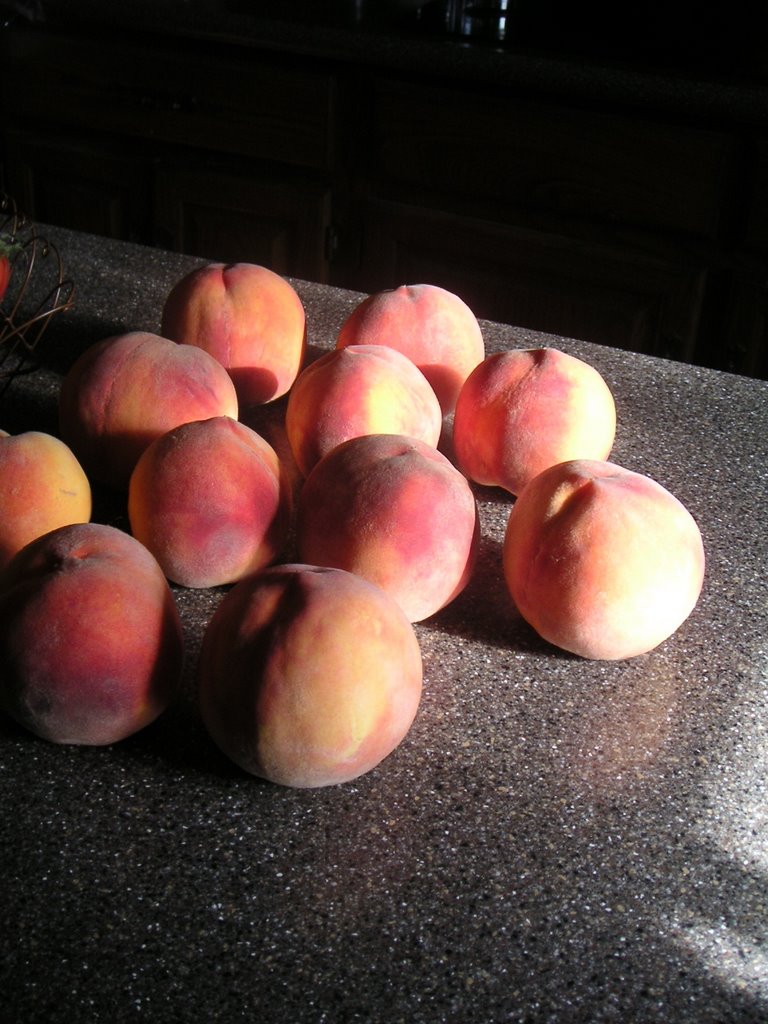
#1. Eat a Palisade peach, from Palisade, Colorado. Yes, they have peaches in Colorado (wine too, actually, and some of it is quite good). Drive out to the countryside in Palisade and choose yourself a local peach farmer who picked the fruit themselves and has been doing it for years and years, and will hand you entire peaches to taste and enjoy while you determine if you'd like to buy them. Feel the weight of the peach in your hands. Notice that it's almost too large to fit in a single palm. Notice how beautiful it is, how beautiful the entire box is; without a single bruise or blemish, and with a full covering of soft, gentle fuzz. Notice that you can tell that it's perfectly ripe, right now, just by the weight of it, the smell of it, and the way it feels in your hand - even without having to squeeze it.

If at all possible, do this while sitting on the porch of your childhood home, lazing around in your pajamas and staring out at the empty fields behind your house while remembering the times you and your brother adventured together when you were young - braving the waters, the dirt, the bugs, the treehouse and the cornfields off in the distance. Feel the warmth of the morning sun on your shoulders and the cool, crisp desert air kissing your skin. Let the juices run down your arms and over your lips, make your fingers sticky, and tumble down into the paper towel on your lap. Do this slowly, languorously, with as much slurping and licking your fingers as possible, and without a care in the world if someone will see you.

#2. Go to a bar in Spain. Any bar that will offer you a selection of tapas - usually there will be large legs of their exquisitely cured ham, or jamon (I do speak some Spanish, so pretend there are accents in the appropriate places for the duration of this paragraph...I just don't know how to do them on html!), hanging above the bar. Don't go to a fancy bar. Just choose one where you see lots of locals. Do this around 8 or 9 PM, as things don't get started until late here. Do this with someone you love talking to (always travel with someone you love to talk to!). Order a plate of jamon iberico. Since it's difficult (if not almost ridiculously expensive) to get a taste of this wonderful ham in the United States, just the feeling of being rebellious will add to the flavor of the meat if you're from here. Watch the bartender slice razor thin slices of your jamon from an entire hog leg held in a vice behind the bar, hooves and all, before he or she brings you your treat. Add to this a bit of quince paste, a little manchego viejo, some Spanish olives and perhaps a glass of house wine or sherry from Jerez.

After you've sipped your wine and tasted the tender, slightly musty and salty meat, look around the bar. Notice the people and the conversations happening around you. Relish in your own friends and the conversations you share with them. Take your time to do this. Just taste, sip, and talk for as long as you can. Follow this experience with a few hours of dinner and conversation before spending the night away dancing at the various night clubs that surround you. Ward off your hangover the next day by dipping hot, crispy, slightly greasy churros into a steaming pool of chocolate and enjoying a lengthy cup of excellent cafe con leche.


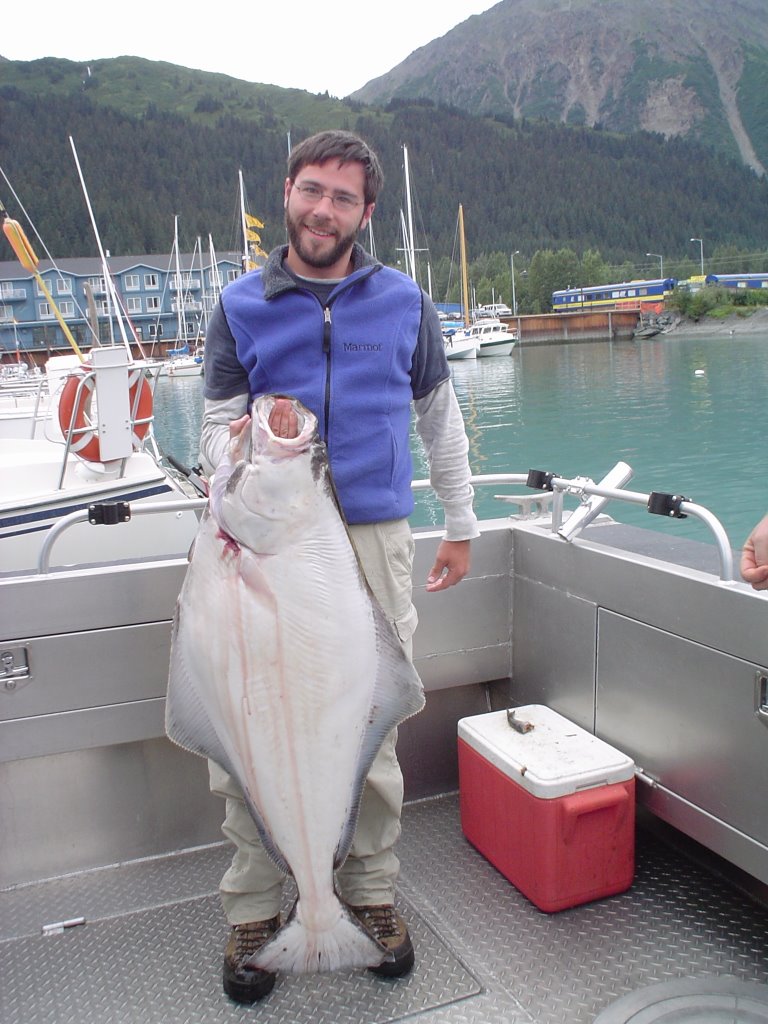
#3. Eat freshly caught halibut, pulled from the icy cold waters off the shores of Alaska only hours earlier, by you or someone you care about. Go to Seward or Homer, Alaska, and book yourself a charter boat. Choose your captain carefully, and you'll pleasantly find your deckhands are almost always enjoyable and helpful. Dress for the weather, taking all precautions to avoid getting seasick (trust me on this one), and spend 8 hours in the crisp Alaskan air deep-sea fishing and gazing out at the mountains, which actually do touch the sea. Listen to the seabirds and watch for whales, bears and other wildlife in the ecosytems surrounding you. Notice the ice-cold brilliant blue of the glaciers slowly cutting jagged scars into the mountains. You'll more than likely catch your limit (2) of this mild, lovely fish and while the younger, smaller ones taste better, the large ones are also quite delicious (and are far more impressive a catch).

When you feel a slight tug, jerk up gently, and start reeling in. Feel your muscles rebel against the weight of the fish (which can be up to 500 lbs!), the tension on the line, and the tons of water beneath you as you coax your fish upward. It will begin to fight as it reaches closer to the surface - so hang on! Once your fish is on the boat, and your muscles (or at least the deckhand's, or perhaps, Dad's) are spent, revel in the glory of winning this fight. When you get home, take a fresh fillet - cut it into chunks, dip it in beer batter made with a local Alaskan brew, and deep fry it until it's golden brown. Fish this fresh will literally melt in your mouth; tasting gently of ocean breezes, exhausted muscles, and cold, deep water.


#4. Taste fois gras with a splash of a French Sauternes...in the same mouthful. Certainly, there are issues with fois gras, and perhaps you do not agree with it, and then, this experience will just have to be passed by. But if you have never tried it, do. Even if it is just once. First take a small nibble of the fois gras; notice the silky-smooth texture of it, roll it around on your tongue tasting the mouthfeel of the slightly salty and fatty goodness. Then, take a second bite, combining it with just a sip of Sauternes - and let that sweetness cut through the fat and salt and balance out the fois gras and explode with flavor. Repeat, repeat, repeat...slowly and seductively until every bit is gone from your plate.

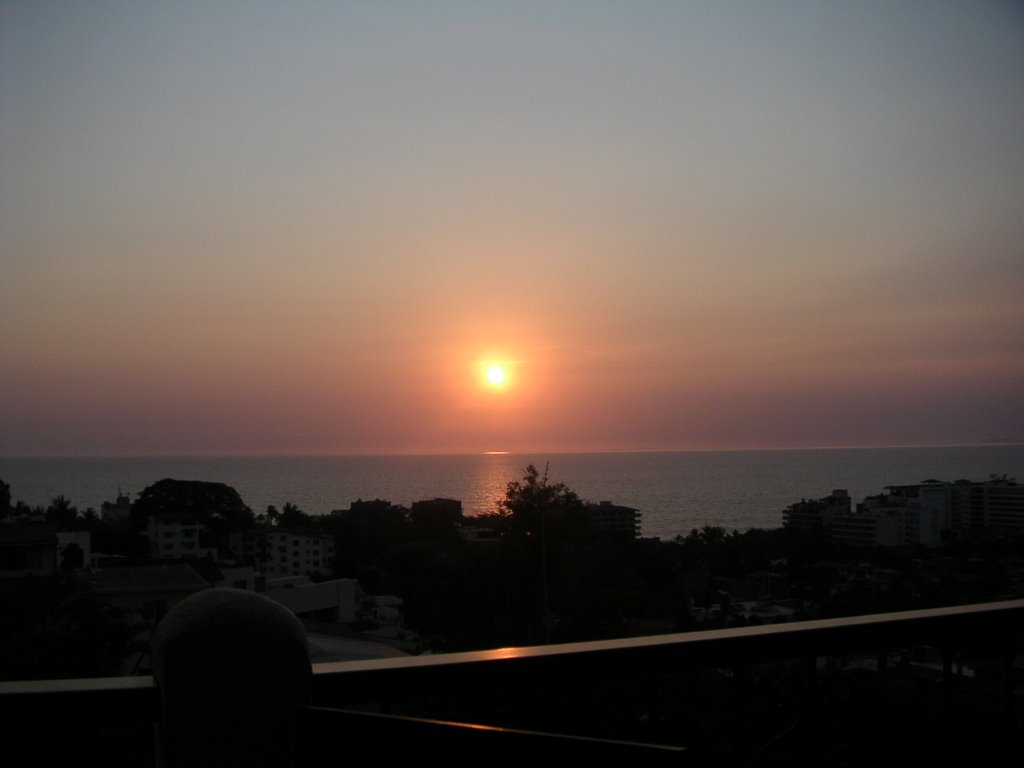
If possible, of course, do this in where everything is freshest and the wine is available, but it is also quite enjoyable to do it at the Vista Grill in Puerto Vallarta, Mexico, on your birthday, out to a very nice dinner on a veranda with someone who loves you very much. Laugh with your French waiter about how odd it is to be eating fois gras, with Sauternes, in Mexico, per his suggestion, but how it is perfect, nonetheless. End your meal with a taste of 1921 Crema de Tequila, Mexico's decadent take on Baileys Irish Cream. Watch the sun go down over ocean and love every minute of your time there, along with every mouthful of deliciously fresh and gourmet food that follows and how every time you get up to go to the restroom, they refold your napkin for you.

#5. Visit Thailand and taste Khao Dome, or coconut sticky rice in banana leaves, handmade by a street vendor. Open up the banana leaf to find a delicious rectangle of sticky rice scented with coconut milk and filled with soft chucks of banana (or plantain). Do this while trekking around the historic city of Ayutthaya, near Bangkok, and marvel at the stunning ruins of this once majestic city. Revel in the brightly colored silks, gigantic Buddha statues, and the feeling of seeing something so ancient and steeped with cultural history. Let yourself feel the sadness of the various tragedies that surround you - that so much was lost when it was destroyed, including the majority of the art and literature, and that thieves and would-be money-makers have chopped off the heads of many Buddhas and stolen them. But also feel the power that comes from such a unique place and full of so many interesting things to see. My new friend, Karen, who has a wonderful blog called Ramblingspoon.com, shares lots of stories about her travels and adventures in Thailand and Cambodia and all kinds of delicious food with her readers, and helped me remember what this sweet snack was called (she has also opened my eyes to many new blogs featuring yummy foods from this area of Asia)...Thanks, Karen!

And thank you, Natalia, for tagging me. Since I've been out of the loop a bit, I have no idea who has or has not done this meme, so if you haven't and you're visiting here, please join in and let us in on your secret knowledge of delicious delicacies you've tried!